The Greater Good That Costs a Person

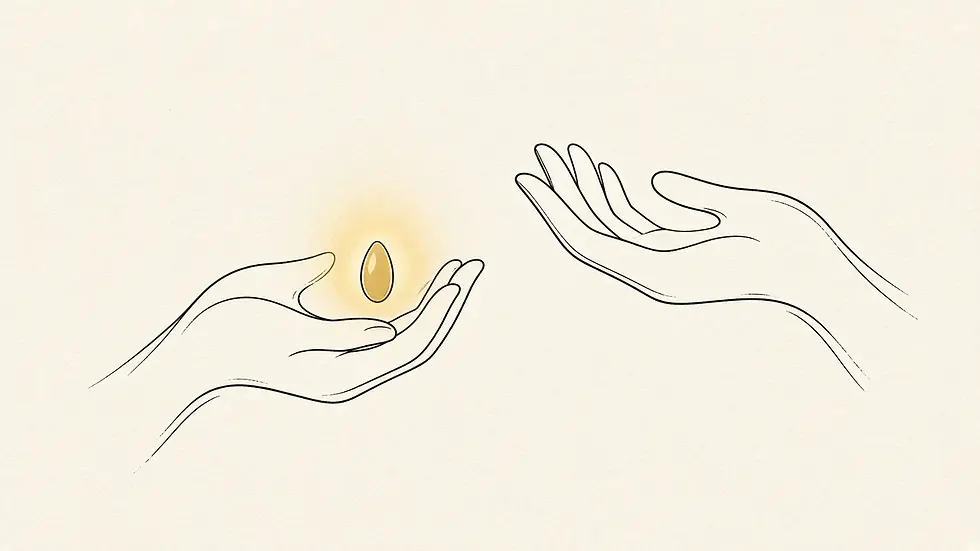
Every culture answers one question, whether it admits it or not: what is one human life worth?
Some answer: precious. Given. Not ours to spend. The Christian claim goes further still. It says a person is not only useful, or clever, or wanted. It says a person is beloved of God — made in a dignity that does not depend on strength, status, or consent of the crowd. And it points to Jesus Christ as the measure of that claim: the One who did not ask others to die for His project, but laid down His own life for theirs. In His teaching, the neighbour’s life is not a tool. It is the point.
Other answers run the other way. Across history and across the world, some belief systems have treated the death of an individual as an omen that “helps” — a sacrifice that pacifies power, buys fortune, or clears the path for a people, a party, or a future. The language changes. The pattern does not. One life becomes cheap so that something larger can feel secured.
That clash is not only ancient. It is the quiet argument under much of our cultural war — including here in Ireland, and across the West that was long shaped by Christian memory. One side still speaks as if each person, born and unborn, sick and strong, is weighty before God. Another side speaks more easily of trade-offs: the inconvenient life, the dependent life, the life that slows the programme. “Greater good” can sound noble until you notice who is always asked to pay for it.
Have you ever watched how quickly a society can rename a person as a problem?
Christianity is not innocent of failure. The Church has been staffed by sinners. Individuals and groups who claimed the name of Christ have harmed, excluded, and betrayed the very people Jesus would have drawn near. Those wounds are real. Naming them is not disloyalty to the Gospel. It is honesty. A faith that worships Truth cannot survive on lies about its own past.
But failure is not the same as falsehood.
If Christ is who He said He is, then the answer to hypocrisy in His people is not less of His way. It is more of it. More of the mercy that does not discard the weak. More of the courage that will not trade a neighbour for comfort. More of the love that counts the other as worth dying for, not worth using. The remedy for a cracked vessel is not to smash the treasure. It is to keep pouring what was meant to be poured.
Voices of Life exists because Ireland has silenced many who still hold that older reverence — that a child in the womb, a mother in crisis, a person at the margin of usefulness, is not spare parts for someone else’s utopia. We do not need a softer Jesus who never costs us anything. We need the One who called each life precious enough for His own blood.
What would Ireland look like if we practised that faith more, not less — not as nostalgia, not as a weapon, but as the stubborn refusal to treat any person as expendable?
The greater good, if it is truly good, will never require us to forget the one.


Comments